
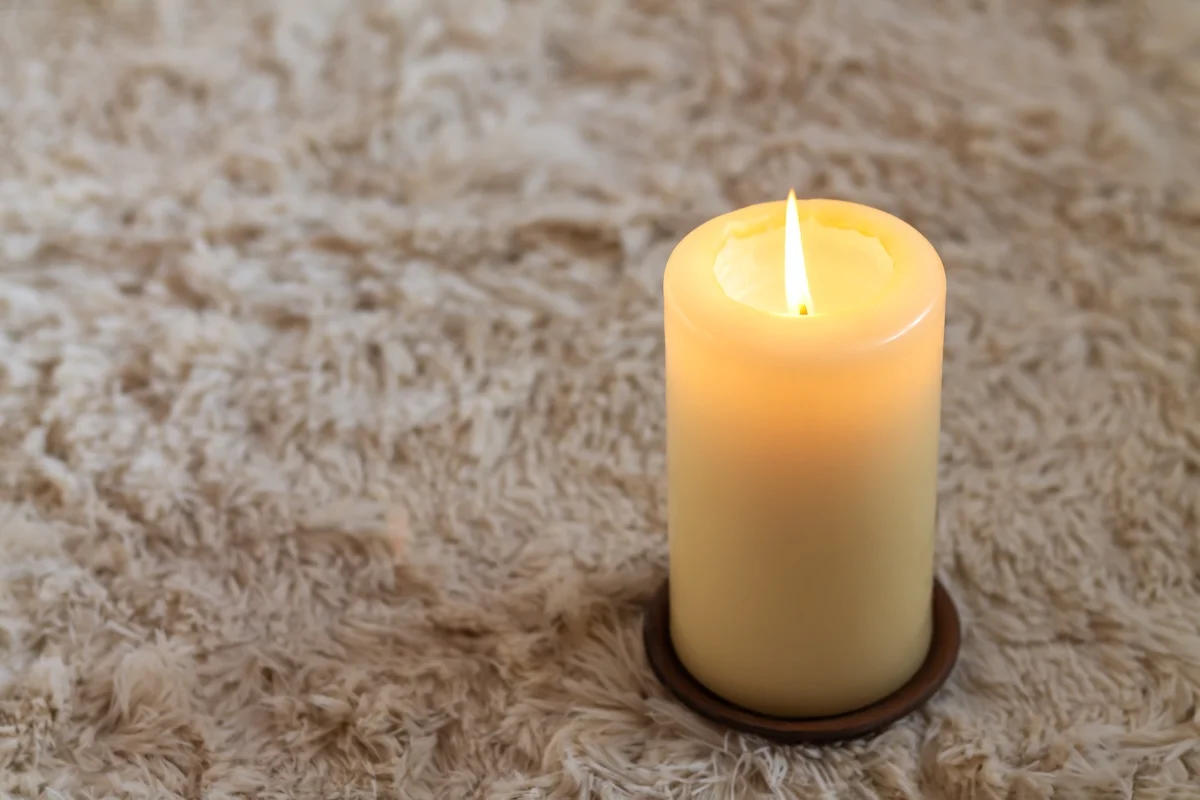
Did you drip candle wax on carpet? You panicked and immediately grabbed a heat source, assuming melting the candle wax on carpet would make cleanup easier. Now you’re faced with a disaster—melted wax soaked deep into carpet fibers and a sticky mess that looks permanent. Therefore, understanding why heat-based removal fails and what actually works prevents you from compounding the initial accident into a carpet-damaging catastrophe.
The instinctive response to spilled candle wax is usually wrong. Consequently, many DIY removal attempts create worse problems than the original accident. Moreover, professional extraction methods differ dramatically from household approaches, using techniques that remove wax without damaging fibers or spreading contamination deeper into carpet backing and padding.
Understanding Candle Wax Behavior on Carpet
Candle wax is a complex substance with specific properties that determine how it interacts with carpet fibers. Therefore, understanding these properties helps explain why certain removal methods work while others cause permanent damage.
Candle Wax Composition:
- Paraffin wax (most common candles)
- Soy wax (higher melting point)
- Gel wax (synthetic, sticky residue)
- Beeswax (premium candles, harder texture)
- Scent oils and dyes mixed throughout
- Varying melting points by wax type (130-180°F typically)
Furthermore, different wax types require different removal approaches. Consequently, identifying your candle type helps determine appropriate extraction methods.
Why Wax Bonds to Carpet:
- Wax fills carpet fiber spaces
- Adhesive properties bond fibers together
- Heat liquefies but doesn’t remove wax
- Cooling re-hardens wax in fibers
- Heat-based methods drive wax deeper
- Moisture can worsen adhesion
- Mechanical removal often necessary
Why Heat-Based Removal Fails Catastrophically
The most common mistake is heating candle wax thinking it will “melt away.” Actually, heat creates multiple problems. Therefore, understanding why this instinctive approach backfires prevents disaster.
The Heat Problem:
- Heating liquefies wax temporarily
- Liquid wax soaks deeper into fibers
- Wax penetrates carpet backing and padding
- Fibers absorb liquefied wax molecules
- Cooling re-hardens wax now embedded deeper
- Removal becomes exponentially harder
- May require professional restoration
Hair Dryer Damage:
- Heat liquefies wax into fibers
- Warm air pushes wax into padding
- After cooling, wax permanently embedded
- Now requires padding replacement potentially
- Creates worse problem than original spill
- Common mistake with tragic results
Iron and Towel Method Problem:
- Traditional method causing major damage
- Heat melts wax into towel temporarily
- Fibers still contain liquefied wax
- Cooling traps wax deeper than before
- Carpet may suffer permanent discoloration
- Fiber damage from heat exposure
- Often recommended but problematic
Why Cold is Better Than Heat:
- Cold hardens wax making removal easier
- Solid wax less likely to spread
- Freezing contracts wax away from fibers
- Mechanical removal works on hardened wax
- No risk of pushing wax deeper
- Non-damaging approach to initial spill
DIY Removal Methods Ranked by Effectiveness
Several DIY approaches exist for candle wax removal. Therefore, understanding effectiveness ranking helps you choose best household approach if professional service unavailable.
1: Ice and Scraping (Most Effective DIY):
- Apply ice directly to wax
- Freeze wax hard (15-20 minutes)
- Gently scrape with dull tool (credit card edge)
- Pick off hardened wax pieces
- Repeat freezing and scraping
- Removes majority of wax successfully
- Non-damaging to fibers
- Works best on fresh spills
- Effectiveness: 70-80%
2: Freezing Spray:
- Commercial freezing spray available
- Rapidly freezes wax solid
- Similar scraping process as ice
- Faster than ice method
- May be slightly more effective
- Still requires patience and care
- Effectiveness: 75-85%
3: Vacuum After Freezing:
- After ice removal of bulk wax
- Vacuum remaining hardened pieces
- Removes surface fragments
- Don’t vacuum warm/soft wax
- Works on solid wax only
- Good for final cleanup
- Effectiveness: Varies, supplementary method
4: Oil-Based Solvent:
- Mineral oil or cooking oil application
- Dissolves wax slightly
- Allows rubbing off wax
- Leaves oily residue on carpet
- Requires cleaning to remove oil residue
- Not ideal for complete removal
- Creates additional problem needing solution
- Effectiveness: 30-50%
5: Rubbing Alcohol:
- Dissolves some wax types
- Apply and rub with cloth
- Works better on soy/gel wax
- Less effective on paraffin wax
- Still leaves residue requiring cleaning
- Time-consuming process
- Effectiveness: 40-60%
6: Commercial Wax Removers (Avoid):
- Various products marketed for wax removal
- Often contain harsh chemicals
- Risk of damage to carpet dyes
- May leave residue worse than wax
- Generally ineffective
- Expensive for limited results
- Effectiveness: 20-40%
Methods to Absolutely Avoid:
- Hair dryers and heat sources (drives wax deeper)
- Irons (damages fibers permanently)
- Boiling water (spreads wax, scalding risk)
- Harsh scrubbing (breaks carpet fibers)
- Pressure washers (tears fibers)
Professional Candle Wax Extraction
Professional methods remove wax without damaging fibers or creating new problems. Therefore, understanding professional approaches explains why expert service succeeds where DIY fails.
Professional Freezing Technique:
- Industrial-grade freezing spray
- Rapid solid hardening of wax
- Specialized equipment for optimal freezing
- Careful mechanical removal
- Experienced technician preventing fiber damage
- Removes 95%+ of wax effectively
Professional Solvent Extraction:
- Commercial-grade solvents (not household products)
- Carefully controlled application
- Designed specifically for carpet safety
- Dissolves remaining wax residue
- Followed by extraction removing solvent and wax
- Prevents oil residue problems
- High effectiveness with no collateral damage
Combination Professional Approach:
- Freezing removes bulk wax
- Solvent treatment dissolves residue
- Professional extraction removes all remaining
- Specialized cleaning addresses residue
- Final inspection ensuring complete removal
- Professional assessment of any fiber damage
- Often completely restores carpet appearance
Fiber Damage Assessment:
- Evaluation of heat damage if present
- Assessment of dye damage
- Determination of restoration possibilities
- Discussion of replacement if severe
- Options for repairing or accepting minor damage

Prevention: The Best Strategy
Preventing candle wax spills is far easier than removing them. Therefore, implementing prevention strategies protects your carpet investment.
Spill Prevention Methods:
- Elevated candle placement away from traffic
- Stable candle holders preventing tipping
- Distance from air currents (fans, air conditioning)
- No candles near pets or children
- Use dripless candles designed to prevent wax drips
- Place candles on heat-resistant surfaces
- Inspect candles regularly for structural integrity
Protection Strategies:
- Decorative plates under candles
- Wax paper under candle holders
- Area rugs in common candle placement areas
- Coasters or heat-resistant mats
- Restricted candle placement in vulnerable areas
- Professional carpet treatment providing some protection
Carpet Type Considerations
Different carpet materials react differently to candle wax. Therefore, understanding your carpet type helps determine removal approach appropriateness.
Wool Carpet:
- More delicate than synthetic
- Heat damage more likely
- Solvent sensitivity requires care
- Professional removal strongly recommended
- Higher risk of permanent damage
- Professional expertise essential
Nylon Carpet:
- Most common residential carpet
- Moderate solvent resistance
- Heat damage possible but less likely
- DIY removal often successful if done carefully
- Professional option for larger spills
Polyester Carpet:
- Solvent resistant generally
- Good candidate for DIY removal
- Less heat-sensitive than wool
- Freezing and scraping usually effective
- Professional help less critical
Olefin Carpet:
- Budget carpet option
- Variable quality affecting damage risk
- Generally moderate solvent resistance
- Acceptable for DIY attempts
- May show damage more visibly
Cost Analysis: DIY vs. Professional
Understanding cost-benefit helps determine when professional service is worth the investment. Therefore, evaluating expenses prevents wasted money on failed DIY attempts.
DIY Costs:
- Ice or freezing spray: 5-15
- Dull scraping tool: Free (household item)
- Cleaning solution if needed: 10-30
- Time investment: 30-60 minutes
- Success rate: 60-80% for fresh spills
- Risk of worsening problem: Moderate to high
Professional Costs:
- Standard wax removal: 150-400
- Large area removal: 300-600
- Fiber damage assessment: Included
- Complete professional guarantee: Included
- Success rate: 95%+
- Risk of damage: Minimal
Cost-Benefit Analysis:
- Small fresh spill: DIY often makes sense
- Large spill or old wax: Professional recommended
- Expensive carpet: Professional strongly recommended
- Uncertainty about wax type: Professional assessment valuable
- Damage already done from heat: Professional necessary
When Professional Help Is Essential
Recognizing situations requiring professional intervention prevents permanent carpet damage. Therefore, understanding these scenarios helps you make smart decisions.
Call Professional When:
- Heat already applied (wax driven deep)
- Large spill covering significant area
- Expensive or delicate carpet (wool, high-quality)
- Unsure about candle wax type
- DIY attempts unsuccessful
- Concern about fiber or dye damage
- Area near stairs or high-visibility zones
- Carpet already showing damage from heat
Related Reading and Resources
For comprehensive carpet care beyond wax removal, consider reading our guide on permanent marker removal, which covers similar delicate extraction challenges. Additionally, the International Carpet Institute provides excellent fiber care guidelines for different carpet materials.
Professional Carpet Systems: Your Wax Removal Specialists
At Professional Carpet Systems, we’ve successfully removed candle wax from thousands of carpets without damage to fibers. Our professional-grade equipment and experienced technicians ensure complete wax removal while preserving your carpet’s appearance and integrity.
We assess wax type and spill severity, determine the best removal approach, and execute extraction preventing damage. Moreover, if heat-based removal already occurred, we evaluate fiber damage and provide honest assessment of restoration possibilities.
Don’t let a candle accident become a carpet catastrophe. Whether you’ve already attempted DIY removal or want professional guidance before trying, contact Professional Carpet Systems for expert candle wax extraction that actually works!