
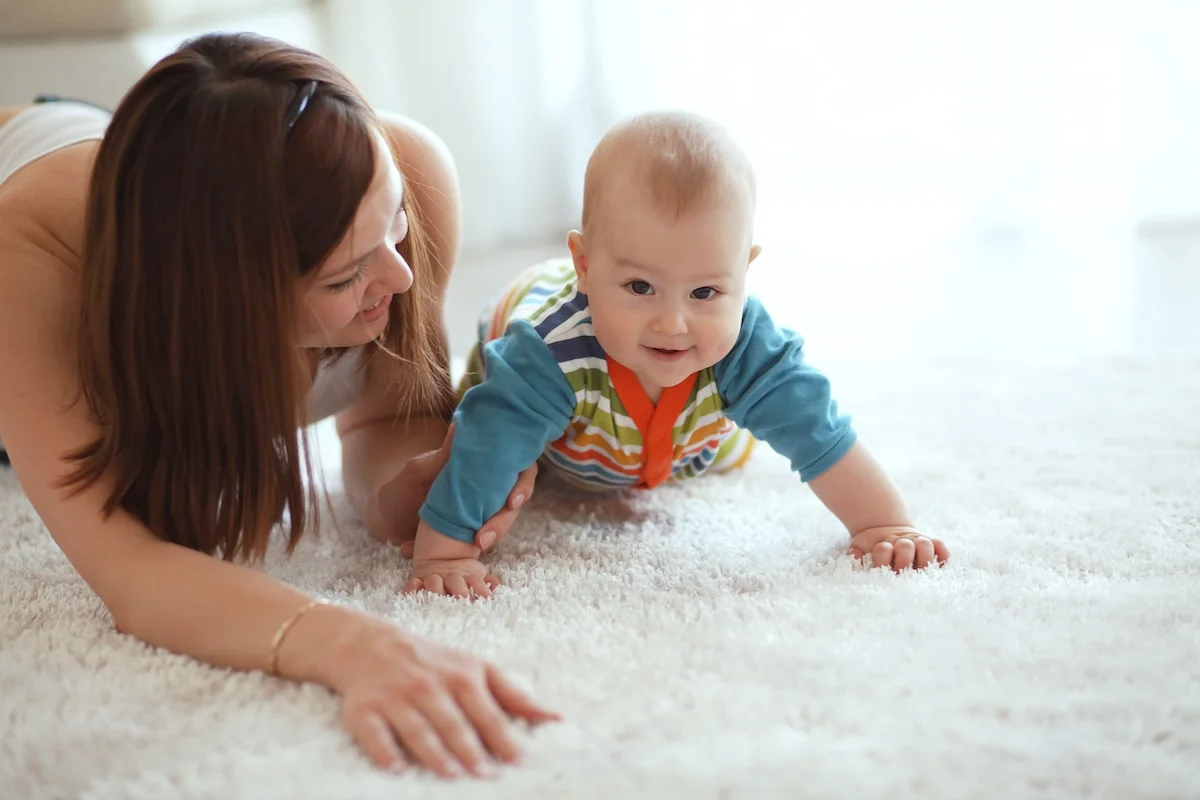
Babies spend a remarkable amount of time close to the floor. They crawl, roll, play on blankets, and put their hands in their mouths long before they can walk. That reality makes the nursery carpet one of the most important surfaces in your home to keep clean, and also one of the most important to clean carefully. Therefore, choosing the right nursery carpet cleaning method matters just as much as choosing to clean at all.
Many parents reach for the strongest product under the sink, assuming that harsher means cleaner. Unfortunately, that instinct can introduce residues, fumes, and moisture problems that are far more concerning for an infant than a few crumbs or a faded patch. Consequently, a safe nursery carpet cleaning plan focuses on removing dirt and allergens effectively while keeping chemical exposure and moisture to a minimum.
Why Nursery Carpet Needs Special Attention
Infants and toddlers breathe at a faster rate than adults relative to their body size, and they spend more time with their faces near the floor. Furthermore, their immune systems are still developing, which means they are more vulnerable to irritants and airborne contaminants. Therefore, the carpet in a nursery deserves a higher standard of care than carpet in a room where adults spend most of their time.
Nursery carpets collect a specific mix of material. Dust, pet dander, and outdoor allergens settle into the pile and are stirred up with every step. Spit-up, formula, food, and diaper leakage add organic residue that can attract odor-causing bacteria. Additionally, dust mites thrive in the humid, undisturbed conditions carpet provides, and their waste is a well-documented trigger for allergies and asthma.
Because of this combination, the goal is not simply a clean-looking floor. The goal is a floor that holds as little dust, bacteria, and residue as possible without introducing new problems.
Understanding Chemical Exposure in Baby Spaces
Many conventional carpet cleaners contain surfactants, solvents, fragrance compounds, and optical brighteners. Some of these release volatile organic compounds (VOCs) into the air for hours or even days after application. Moreover, strong fragrances can irritate sensitive airways, and certain solvents leave residues that babies can absorb through skin contact or ingest during play.
Look for cleaners labeled fragrance-free or low-VOC, and read ingredient lists rather than relying on vague claims like “natural” or “gentle,” which are not regulated consistently.
The Environmental Protection Agency offers helpful guidance on indoor air quality and the sources of household pollutants, including how ventilation and product choice affect what you breathe at home. Reviewing that information can help you make informed decisions about which products belong in a nursery.

Safer Cleaning Products to Consider
Several categories of cleaning agents tend to suit nursery environments better than heavy-duty alternatives. Plain water extraction, performed with a properly maintained machine, removes a great deal of soil without adding chemical load. Mild, pH-neutral carpet cleaning solutions designed for residential use are typically the next step when a spot needs more help. Enzyme-based cleaners can be effective for organic residue such as formula or spit-up, because they break down proteins rather than masking odor.
Products to avoid or use only with extreme caution include bleach, ammonia-based cleaners, strong acids, and heavily scented sprays. Chlorine bleach can release irritating gases when mixed with other cleaners, and it can damage carpet dyes. Ammonia can irritate the eyes and lungs. Heavily perfumed products may mask odor without removing the source, which means residue and bacteria remain in the fibers.
Whatever you choose, test it on an inconspicuous area first and wait until the area dries completely. This simple step protects both the carpet and the people who will be sharing the room.
Step-by-Step Safe Nursery Carpet Cleaning Process
A careful cleaning routine for a nursery follows a predictable order. Start by removing the baby and all toys, blankets, and soft items from the room. Then vacuum thoroughly using a machine equipped with a HEPA filter, since standard filters can release fine particles back into the air. Move slowly, making several passes in overlapping directions to lift embedded grit.
Next, pre-treat any visible spots. Blot rather than rub, since rubbing pushes residue deeper and frays fibers. For organic stains, apply a small amount of enzyme cleaner, let it sit for the recommended time, and blot again with clean white cloths. Once the spot is treated, rinse lightly with plain water and blot until the cloth comes away nearly dry.
For broader cleaning, use a hot water extraction machine with a residential-safe solution, or hire a professional who uses low-moisture methods. Work in sections, and avoid oversaturating the carpet. Excess water is one of the most common causes of problems in nurseries, because it soaks into the padding and creates conditions for mold.
Finally, ventilate the room. Open windows if the weather allows, run a fan, or use an air purifier. Keep the nursery closed off until the carpet is fully dry, which typically takes several hours and sometimes longer in humid climates.
Drying: The Step Most Parents Overlook
Drying is often more important than cleaning itself. Carpet that stays damp for more than 24 hours can develop mildew, and padding beneath it can harbor mold that is much harder to remove than surface dirt. Babies crawl close to the floor, so any mold spores released into the air are a direct exposure risk.
Speed up drying by running a dehumidifier, directing a fan across the carpet, and keeping the thermostat at a comfortable temperature. Lift a corner of the carpet near a seam or along the wall after a few hours to check the padding. If it still feels damp, keep the room ventilated and consider calling a professional for moisture extraction.
Never place a crib, play mat, or bassinet on carpet that is still wet. Wait until the surface is completely dry to the touch, and check the padding as well.
Dust Mites, Allergens, and Air Quality
For many families, the biggest nursery carpet concern is not chemicals but allergens. Dust mite droppings, pet dander, pollen, and mold spores accumulate in carpet over time. These particles can aggravate asthma and allergies, which are common in young children and often emerge during the first few years of life.
Regular cleaning reduces this load significantly. Professional hot water extraction removes many allergens that surface vacuuming leaves behind. Between professional visits, vacuum at least once or twice a week with a HEPA-equipped machine, and keep toys washable and off the floor when not in use. Additionally, consider washing bedding and stuffed animals regularly in hot water, since these items collect dust mites just as readily as carpet.
Reducing humidity also helps. Keeping indoor relative humidity between 30 and 50 percent discourages dust mites and mold. A simple hygrometer can help you monitor levels in the room.
When to Call a Professional
Some situations call for expert help rather than home cleaning. Call a professional when you notice persistent odor that returns after nursery carpet cleaning, visible mold or discoloration, a large spill involving organic material, or water damage from a leak or flood. Professionals also help when the carpet has not been cleaned in a year or more, or when someone in the household has asthma or severe allergies.
Professionals use commercial extraction equipment, which removes more water and soil than rental machines. They also have access to residential-safe products tailored to sensitive environments, and they can assess padding and subfloor conditions that home cleaners cannot see. For a deeper look at how professional methods handle hidden contamination, you may find our guide on pet accident detection with black light useful, since many of the same tools apply to nursery spills.
A Simple Maintenance Schedule for Nursery Carpet
Consistent habits keep the nursery safer between professional nursery carpet cleanings. Vacuum with a HEPA filter two to three times per week while the baby is crawling or playing on the floor. Spot clean spills immediately with plain water and a cloth, then follow with a gentle enzyme cleaner if needed. Deep clean with professional extraction every six to twelve months, or more often if the room sees heavy use or a pet lives in the house.
Rotate toys and play mats so that high-traffic areas can dry and recover. Remove shoes at the nursery door to avoid tracking in soil and outdoor contaminants. Keep a small container of white cloths and a sealed bottle of enzyme cleaner handy so spills can be treated the moment they happen.
Professional Carpet Systems: Caring for Your Baby’s Space
At Professional Carpet Systems, we understand that a nursery carries a different set of expectations than any other room in your home. Our technicians use residential-safe cleaning solutions, low-moisture and controlled extraction methods, and HEPA-filtered equipment designed to remove allergens and residue without leaving harmful residue behind. We also check padding and subfloor conditions so that drying is complete and the room is genuinely ready for your baby.
Whether you are preparing a nursery for a new arrival, recovering from a messy spill, or simply keeping up with routine care, our team can help you create a clean, healthy space. Contact Professional Carpet Systems to schedule a nursery carpet cleaning that puts your baby’s safety first.