
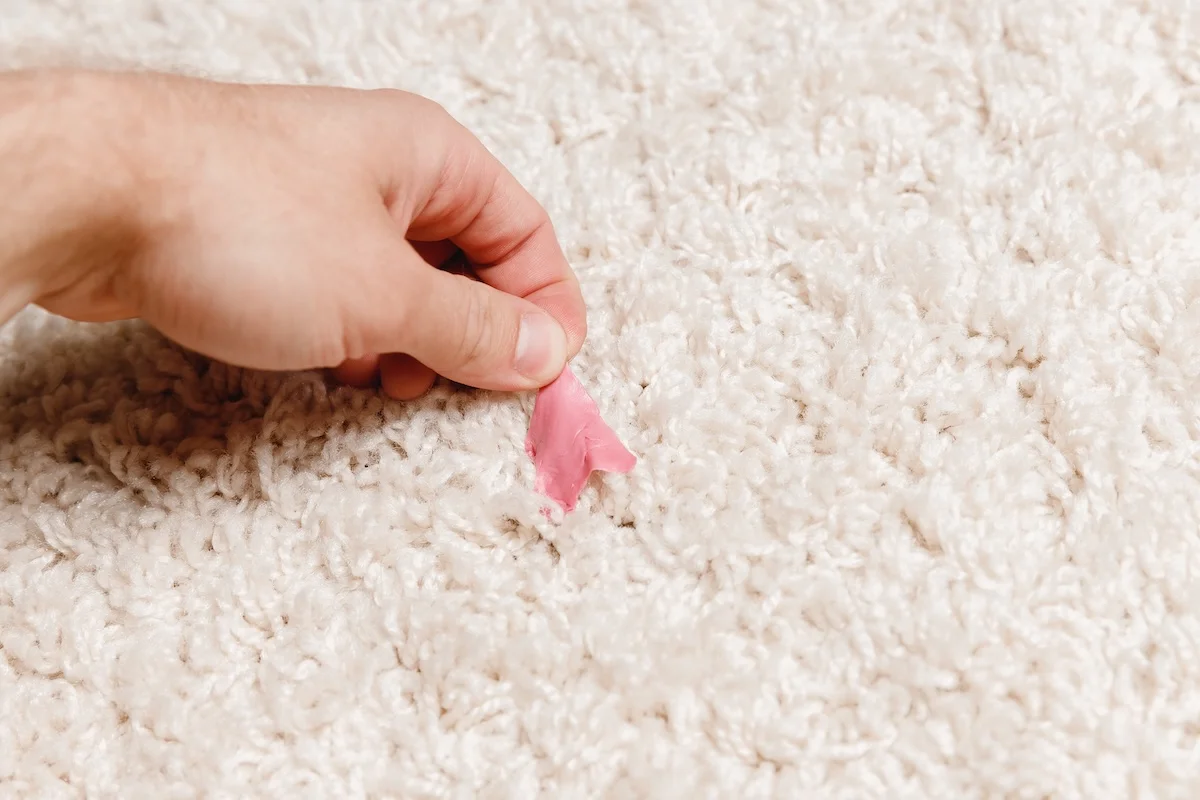
You feel it before you see it. A wad of chewing gum has found its way into your carpet, and now it is wrapped around fibers, sticky to the touch, and already starting to pick up dirt. The natural reaction is to scrape it, pull it, or attack it with whatever cleaner is nearby. Unfortunately, those instincts often cause the gum stuck in carpet to go deeper, tear the fibers, or leave a sticky residue that is harder to remove than the gum itself. Therefore, understanding how gum bonds to carpet and which removal methods are safe makes the difference between a quick fix and a permanent problem.
Gum is one of the most common carpet mishaps in homes with children, pets, and busy households. The good news is that most gum can be removed successfully if you act carefully and choose the right technique for your carpet type. This guide explains why gum sticks so stubbornly, which DIY methods work best, which ones to avoid, and when it makes sense to call a professional.
Why Gum Stuck in Carpet Is So Stubborn
Chewing gum is designed to be elastic and to adhere to surfaces, which makes it a difficult material to remove. Most modern gum bases are made from synthetic polymers such as polyisobutylene and polyvinyl acetate, along with resins, waxes, and softeners. These ingredients create a substance that stretches and bonds to whatever it touches. Once gum is pressed into carpet, it wraps around individual fibers and works its way into the loops or tufts.
Heat makes the problem worse. Warm gum softens and spreads, sinking deeper into the carpet and bonding more tightly with the fibers. Consequently, a wad that could have been lifted cleanly when it was cool can become a smear that spreads across several inches. Furthermore, gum often collects dirt, hair, and debris as it sits, which turns a simple sticky spot into a grimy patch that requires more than one round of treatment.
Understanding this behavior explains why the first step is always to firm up the gum, not soften it.
Step One: Freeze the Gum Solid
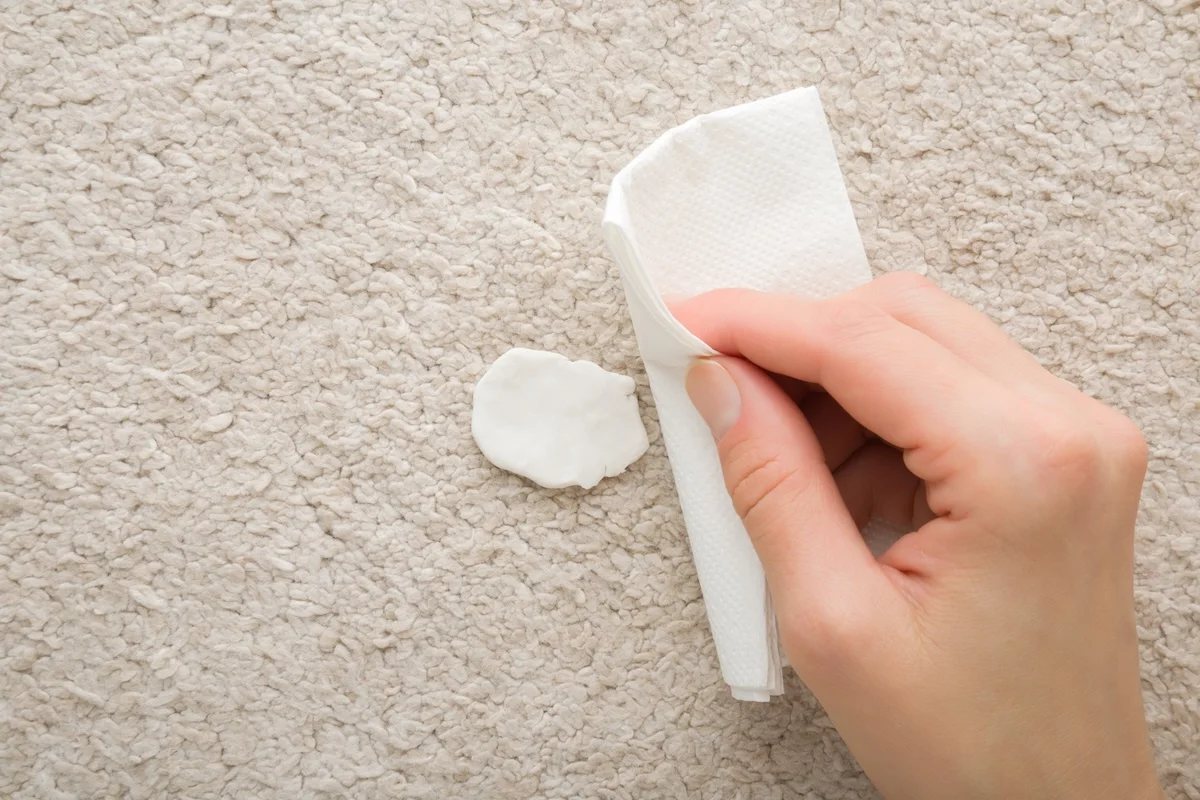
Freezing is the safest and most effective first step for almost every gum removal job. Cold makes gum hard and brittle, so it lifts away from fibers instead of stretching and smearing. Begin by sealing a few ice cubes in a plastic bag and pressing the bag directly onto the gum. Hold it there for 10 to 15 minutes, or until the gum feels firm and no longer tacky.
You can also use a commercial freezing spray, sometimes sold as a cold spray for stain removal. These sprays chill the gum faster than ice, but they should be used according to the label and kept away from open flames. Never use dry ice or extremely cold chemicals without proper training, since they can damage carpet backing and cause frostbite.
Once the gum is hard, use a dull tool to break off the bulk. A plastic spoon, a butter knife with a rounded edge, or the edge of a credit card works well. Scrape gently in the direction of the fibers rather than across them. Work from the outside edges toward the center so you do not push loose gum into new areas.
If small pieces remain, repeat the freezing process. Several short rounds of freezing and scraping remove far more gum than one aggressive attempt.
Step Two: Dissolve the Remaining Residue
After the bulk of the gum is gone, a thin film of residue usually remains. This film is typically oily or waxy, and it will not respond to water alone. Several household products can dissolve it, but each should be tested first.
Cooking oil, peanut butter, or petroleum jelly can loosen gum residue because they contain fats that break down the sticky film. Apply a small amount with a cotton swab or clean cloth, let it sit for several minutes, and then gently work the residue with the cloth. The fat dissolves the gum’s bond, allowing you to lift the remaining material. Because these products leave an oily film of their own, you must follow up with a gentle detergent to remove them completely.
Dish soap mixed with warm water is the next step. Add a few drops of clear, dye-free dish soap to a cup of warm water, dampen a clean white cloth, and blot the residue. Avoid soaking the carpet. Blot repeatedly with fresh sections of the cloth until no more residue transfers.
Rubbing alcohol can also work on gum residue, particularly on synthetic carpet. Apply a small amount to a cloth and dab the spot. Always test in a hidden area first, because alcohol can affect some dyes, especially on wool and natural fibers.
Step Three: Rinse and Dry Thoroughly
Every solvent or oil you use must be rinsed out. Leftover residue attracts dirt and can create a new sticky patch within days. Dampen a clean cloth with plain water and blot the treated area until it feels clean. Repeat with fresh cloth sections until the cloth no longer picks up any residue or soap.
Drying is equally important. Place a fan on the area, open a window if possible, and allow the carpet to dry completely. Moisture trapped in padding can lead to odor and mold, so avoid saturating the spot in the first place. Blot firmly and use as little liquid as you can get away with.
Methods to Avoid
Several popular suggestions can cause serious carpet damage, and they should be avoided. Heat is the most common mistake. Hair dryers, irons, and heat guns melt gum into the fibers and can permanently discolor or melt synthetic carpet. Similarly, steam cleaners can set residue deeper.
Strong solvents such as acetone, nail polish remover, and paint thinner are often recommended online, but they can strip dye from carpet, weaken fibers, and leave harmful fumes behind. Acetone is particularly risky on nylon, acetate, and wool. Bleach is equally problematic, since it can cause permanent color loss and produce irritating gases when mixed with other cleaners.
Scraping with a sharp object, such as a knife or screwdriver, can cut fibers and leave visible damage. Scrubbing hard with a brush frays the pile and creates a worn, matted appearance that is difficult to repair.
Carpet Type Considerations
Different carpet fibers respond differently to gum removal, so it helps to know what you have. Nylon is the most common residential carpet and tolerates freezing and gentle detergent well, but it can be damaged by strong solvents. Polyester is generally durable and resistant to many solvents, though it can be sensitive to heat. Wool requires the gentlest approach, with minimal moisture, mild cleaners, and pre-testing on a hidden area. Olefin, often used in outdoor and budget carpet, is resistant to moisture but can melt under heat.
If you are unsure what kind of carpet you have, check the manufacturer’s label or your original paperwork. When in doubt, begin with freezing and mild dish soap, since those methods are the least likely to cause harm.
Preventing Gum Stuck in Carpet in the First Place
Prevention is simple but effective. Keep gum out of rooms where carpet is most vulnerable, and encourage family members to throw gum away before entering living spaces or bedrooms. Using a small trash can near seating areas can reduce the temptation to discard gum on the floor. For households with children, a quick reminder can go a long way.
Regular vacuuming and professional cleaning also help. Gum tends to attract dirt and dust, so a carpet that is cleaned on a consistent schedule is less likely to develop sticky residue that becomes a bigger problem. Spot treating spills promptly, before they dry, is always the best strategy.
When to Call a Professional
Some gum situations are best left to experts. Call a professional if the gum has been pressed deep into the pile, if it is on a delicate or wool carpet, or if previous home attempts have left discoloration, fiber damage, or a stubborn residue. Professionals have access to commercial-grade freezing and solvent products designed for carpet safety, and they know how to balance removal strength against the risk of fiber damage.
Professional technicians also assess the carpet’s condition after removal. They can determine whether the area needs additional cleaning, color restoration, or a repair. For a related guide on another delicate carpet stain, you may find our article on removing permanent marker from carpet helpful, since many of the same caution principles apply.
For broader guidance on carpet care and fiber types, the Carpet and Rug Institute offers resources on maintaining carpet and understanding how different fibers respond to cleaning.
Professional Carpet Systems: Your Gum Stuck in Carpet Removal Experts
At Professional Carpet Systems, we remove gum from carpet every week without damaging fibers or leaving residue behind. Our technicians begin with a careful assessment of your carpet type and the extent of the problem, then choose the safest effective method. We use controlled freezing, residential-safe solvents, and professional extraction to lift gum completely while protecting the appearance and integrity of your carpet.
If you have gum stuck in carpet and are not sure how to proceed, do not risk making the problem worse. Contact Professional Carpet Systems today for expert gum removal that gets the job done right the first time.